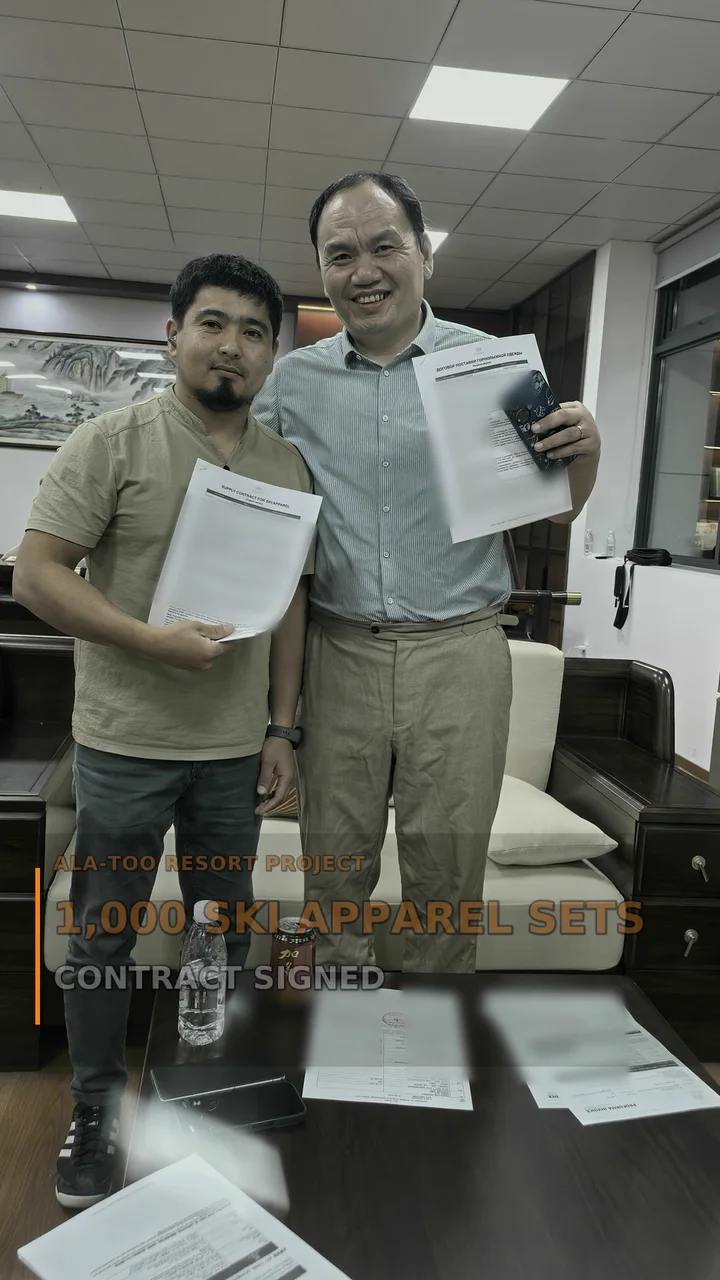
The public image records the signed project while commercially sensitive contract details remain obscured.
Case summary
In September 2026, Anas, representing the Ala-Too Resort ski wear project in Kyrgyzstan, visited KAIDA's factory in Hunan, China. The visit covered the production floor, equipment, garment samples and technical details. It concluded with a signed contract for 1,000 ski apparel sets. This case records the factory visit and signed order; it does not claim that bulk production or delivery has been completed.
1. Watch the 40-second factory visit record
The video follows the project representative from the factory floor to the sample discussion and signed agreement. It is published as first-party KAIDA evidence, with the contract details in the footage obscured.
A 40-second record of the KAIDA factory visit, production and sample review, technical discussion and contract signing for the Ala-Too Resort ski wear project. The web version is silent and includes English descriptions.
2. What the buyer reviewed in person
An in-person visit lets a sourcing team connect public factory claims to the real production environment. The footage shows the visitor walking through the facility, observing equipment and workflow, handling garment samples and discussing details with the KAIDA team.
Production environment and relevant equipment
Garment samples and construction details
Questions that needed direct technical discussion
Alignment before the commercial agreement was signed
3. Confirmed project scope
The confirmed scope is a 1,000-set ski apparel project for Ala-Too Resort. The visit connected the buyer's project requirements with KAIDA's ski wear development and manufacturing route before the contract was signed.
Product category: ski apparel sets
Project quantity: 1,000 sets
Buyer market: Kyrgyzstan
Factory location reviewed: Hunan, China
4. Current status and evidence boundary
The public evidence supports three statements: the representative visited KAIDA, samples and technical details were reviewed, and a 1,000-set contract was signed. Bulk production, final inspection, shipment and delivery are later milestones and will only be added when corresponding evidence is available.
5. Prepare for a useful factory visit
A visit is more productive when the open decisions are listed before arrival. Buyers can use the meeting to inspect the relevant process, compare samples and leave with a written next step rather than relying on a general tour.
Send the tech pack, reference garment or development brief in advance.
List the intended use, quantities, size range and target delivery window.
Mark material, construction, branding and testing decisions that still need confirmation.
Record agreed sample changes, responsibilities and approval points before leaving.
Quick answers
Questions buyers also ask.
01What did the Ala-Too Resort representative review at KAIDA?+
The visit covered the factory floor, production equipment, garment samples and technical details before the commercial agreement was signed.
02How large is the confirmed ski wear project?+
The signed project covers 1,000 ski apparel sets.
03Does this case show completed bulk production or delivery?+
No. It documents the factory visit, sample and technical review, and signed contract. Production, final inspection, shipment and delivery are not presented as completed milestones on this page.
04Can an overseas buyer arrange a KAIDA factory visit?+
Yes. Contact KAIDA with the product category, reference or tech pack, intended quantity and timing so the visit can focus on the relevant development and production stages.
05What should a ski wear buyer send before a sample review?+
Send the intended use, product drawings or reference, quantity and size range, destination market, timing, and any material, construction, branding or testing requirements already decided.
Factory evidence
Continue with the ski wear program and supporting factory evidence.
Send your ski wear reference or tech pack, intended use, quantity, size range, destination market and required timing. We can identify the details to review before sampling or a factory visit.