See how waterproof jacket seams are sealed in factory production, what buyers should specify, and how to review fabric, tape, construction and testing.
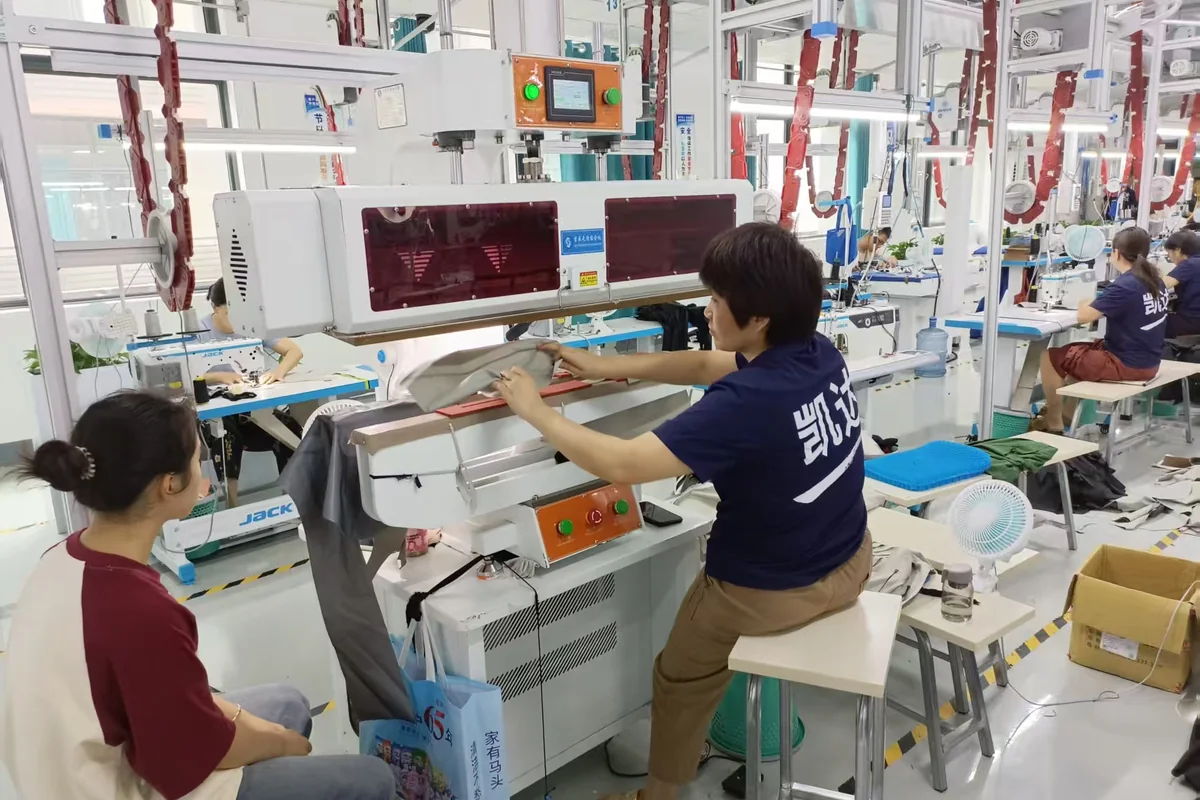
A seam-sealing station inside KAIDA's Hunan factory. The applicable tape, process setup and acceptance criteria depend on the approved jacket specification.
Buyer answer
To waterproof stitched seams in jacket production, the approved construction normally uses compatible seam tape over the seam areas named in the specification. The factory aligns the shell fabric, coating or membrane, seam construction, tape and application setup, then inspects the taped areas and tests the complete garment against the buyer's agreed requirement. Seam tape supports waterproofing; it cannot correct an unsuitable fabric, design or undefined test standard.
1. Map the seams that need waterproofing
The product specification should identify which seams need tape. This avoids leaving the decision to an assumption on the production floor.
State whether all sewn seams or only named seam zones require tape.
Mark the required areas on the tech pack or seam map.
Resolve pockets, zippers, darts, junctions and curved areas during sample review.
2. Align fabric, seam and tape
The outer material, any coating or membrane, the stitched construction and the tape must be reviewed as one compatible system.
Confirm the actual shell fabric and finish before the tape is approved.
Review the proposed tape on the production material rather than a substitute fabric.
Approve the finished seam on each relevant material and color combination.
3. Approve the seam-sealing setup
Application settings and handling depend on the approved materials and seam. A bulk program should follow the approved construction rather than a generic setup.
This 14-second KAIDA factory clip shows an operator guiding a sewn garment panel through a seam-sealing station. It demonstrates tape application only; compatibility, settings, inspection and test requirements must be confirmed for the actual product.
4. Inspect before the next stage
Applied tape should be reviewed as part of the manufacturing flow. Any program-specific acceptance point should be stated in the quality plan.
Check tape placement and coverage against the approved seam map.
Review lifting, wrinkles and missed areas before the garment moves forward.
Define how a rejected area is recorded, corrected and checked again.
5. Connect construction to testing
Testing should use the method and acceptance criteria agreed for the product. The result reflects the whole garment system, not only the presence of tape.
State the required test method and acceptance point before sample approval.
Use the approved sample and written specification as the bulk reference.
Treat a test result as evidence for the complete garment system, not a generic tape or machine claim.
Quick answers
Questions buyers also ask.
01Does every outdoor garment require seam sealing?+
No. It depends on the intended use and approved construction. The requirement should be defined for the specific product.
02How are waterproof jacket seams sealed in factory production?+
After sewing, an operator applies compatible seam tape over the seam areas defined in the approved specification. The taped areas are inspected, and the finished garment is reviewed against the agreed test and acceptance requirements.
03What should a buyer specify before seam sealing?+
Provide the jacket construction or seam map, actual shell fabric and finish, required seam coverage, intended use, and any test method or acceptance criteria that the product must meet.
04How much seam-sealing capacity does KAIDA have?+
KAIDA's current factory data lists 40–50 seam-sealing machines.
05Can seam sealing fix an unsuitable fabric or design?+
No. The fabric, product design, seam construction, tape and process all need to support the agreed performance requirement.
Send your jacket reference or tech pack, the intended seam coverage, shell material if known, quantity, destination market and any required test or acceptance criteria. KAIDA can review the construction inputs before sampling or quoting.