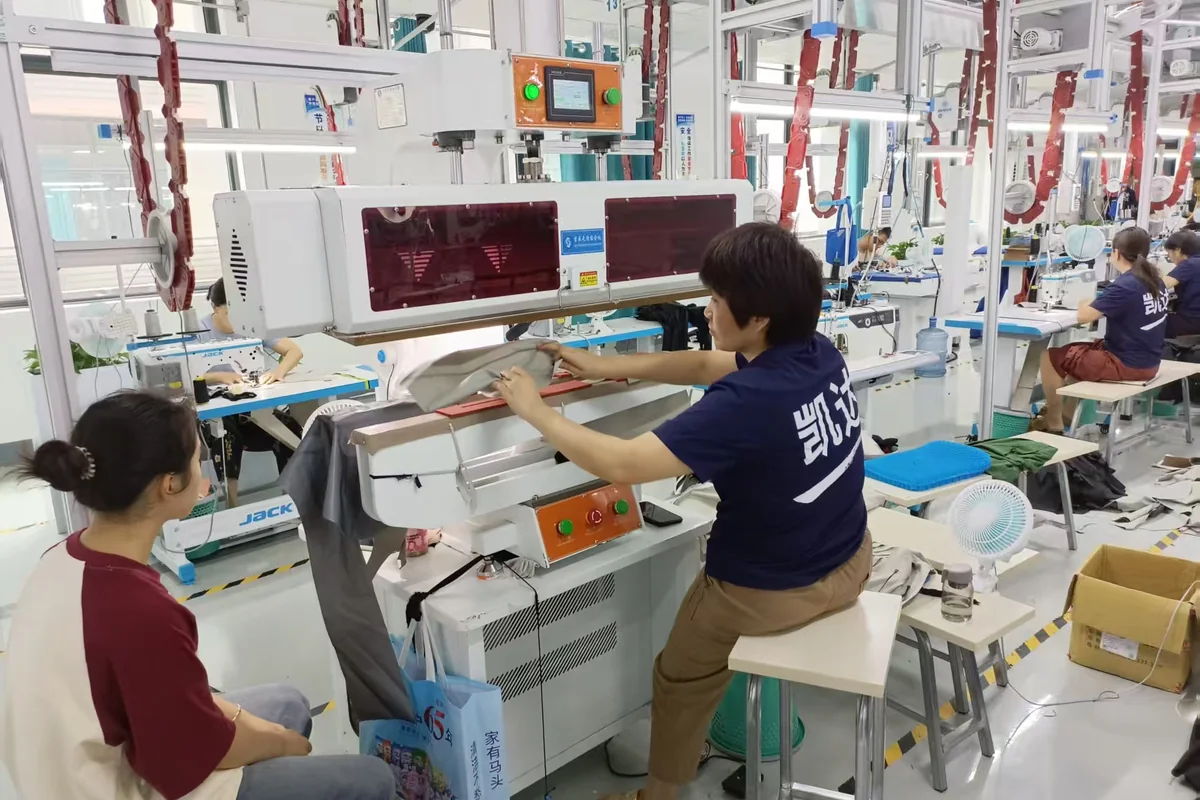
1. Confirm the factory's real product focus
A factory should be able to explain which outdoor apparel categories it makes, where waterproof construction enters the workflow and which parts of production are visible on site.
- Ask for current factory-floor images and process videos.
- Check whether the public company name is consistent across materials.
- Match the claimed capability to the actual product you plan to make.
2. Review seam sealing as a system
A machine count is useful evidence of capacity, but it is not a complete waterproof guarantee. Fabric, seam design, tape compatibility, machine settings, operator control and inspection must work together.
- Define which seams require tape.
- Confirm the construction and tape during development.
- Agree how the applied seam will be checked.
3. Define the test before production
Do not rely on an undefined statement such as 'waterproof tested.' The buyer and factory should align the test method, product stage and acceptance criteria for the specific program.
4. Check the route from sample to bulk
The approved sample and written specification should guide material, construction, measurements and QC. Ask how development decisions are handed over to the production team.
5. Compare verified facts—not sales language
KAIDA publishes six core factory facts: 20,000+ m², 300+ employees, seven production lines, 30,000+ jackets per month, 40–50 seam-sealing machines and 15 QC staff. A buyer should still review whether this setup fits the actual program.
6. Compare quotations against the same brief
A price comparison is useful only when each supplier is quoting the same product brief. Keep the jacket reference, materials, construction, branding, quantity, color and size breakdown, test requirements, packaging and delivery basis consistent.
- Ask each supplier to list any exclusions, substitutions or assumptions in the quotation.
- Separate sample charges, material minimums, testing, packaging and freight where they apply.
- Record the quoted delivery basis and the conditions that could change price or timing.
7. Record approvals before bulk production
The purchase decision should connect to the approved sample and written specification. Record material and trim approvals, color references, measurements, waterproof construction, test criteria, packaging and the agreed delivery plan before bulk production starts.
- Keep open decisions in writing instead of relying on chat history or memory.
- Confirm who approves each sample, material, test result and production change.
- Make sure the final quotation and purchase order refer to the same approved specification.